
Comprehensive Penetration Testing and Red Team Services for Enhanced Cybersecurity
By Tom Oneil, CodeWizzard Cyber Security | Your Trusted US
In an era where cyber threats are increasingly sophisticated, organizations must prioritize their cybersecurity measures. This article delves into the critical roles of penetration testing and red team services in fortifying business security. Readers will gain insights into how these services identify vulnerabilities, enhance incident response, and ultimately protect sensitive data. By understanding the mechanisms behind these cybersecurity strategies, businesses can better prepare for potential threats. The discussion will cover definitions, processes, and the benefits of engaging professional services, including how CodeWizzard Cyber Security can assist in these areas.
What Are Penetration Testing and Red Team Services?
Penetration testing and red team services are essential components of a comprehensive cybersecurity strategy. Penetration testing involves simulating cyber attacks to identify vulnerabilities within an organization’s systems, applications, and networks. This proactive approach allows businesses to address weaknesses before they can be exploited by malicious actors. Red team services, on the other hand, take this a step further by simulating real-world attack scenarios, providing a more in-depth assessment of an organization’s security posture.
Indeed, the fundamental role of penetration testing in cybersecurity cannot be overstated, offering a crucial lens into an organization’s defensive capabilities.
Understanding Penetration Testing Basics
One of the most important elements of cyber security testing is the penetration test. Penetration tests show the extent to which IT security is threatened by attackers. Penetration Test is a complex process that technically provides a comprehensive and realistic picture of the vulnerabilities of the infocommunication system.
Basic of cybersecurity penetration test, 2018
Defining Penetration Testing and Its Role in Vulnerability Assessment
Penetration testing is a methodical approach to evaluating the security of a system by simulating an attack from malicious outsiders. It involves various methodologies, including network testing, web application security testing, and social engineering tactics. The primary goal is to identify vulnerabilities that could be exploited, allowing organizations to remediate these issues before they lead to a security breach. By conducting regular penetration tests, businesses can maintain a robust security posture and ensure compliance with industry regulations.
This methodical approach is often encapsulated within broader vulnerability assessment and penetration testing (VAPT) frameworks, which are critical for evaluating security measures.

VAPT: Vulnerability Assessment & Penetration Testing Overview
Security professionals across the globe generally address these security risks by Vulnerability Assessment and Penetration Testing (VAPT). The VAPT is an offensive way of defending the cyber assets of an organization. It consists of two major parts, namely Vulnerability Assessment (VA) and Penetration Testing (PT). In Penetration testing the tester simulates the activities of a malicious attacker who tries to exploit the vulnerabilities of the target system. This process of VAPT helps in assessing the effectiveness of the security measures that are present on the target system.
An overview of vulnerability assessment and penetration testing techniques, S Shah, 2015
Understanding Red Team Exercises and Cyber Attack Simulation
Red team exercises are designed to mimic the tactics, techniques, and procedures of real-world attackers. These exercises provide organizations with a realistic view of their security vulnerabilities and the effectiveness of their defenses. By engaging in red team simulations, businesses can better understand how attackers think and operate, allowing them to strengthen their incident response strategies. The insights gained from these exercises are invaluable for improving overall security measures and preparing for potential cyber threats.
However, the dynamic nature of these simulated attacks, particularly those employed by red teams, often presents unique challenges for detection by conventional security systems.
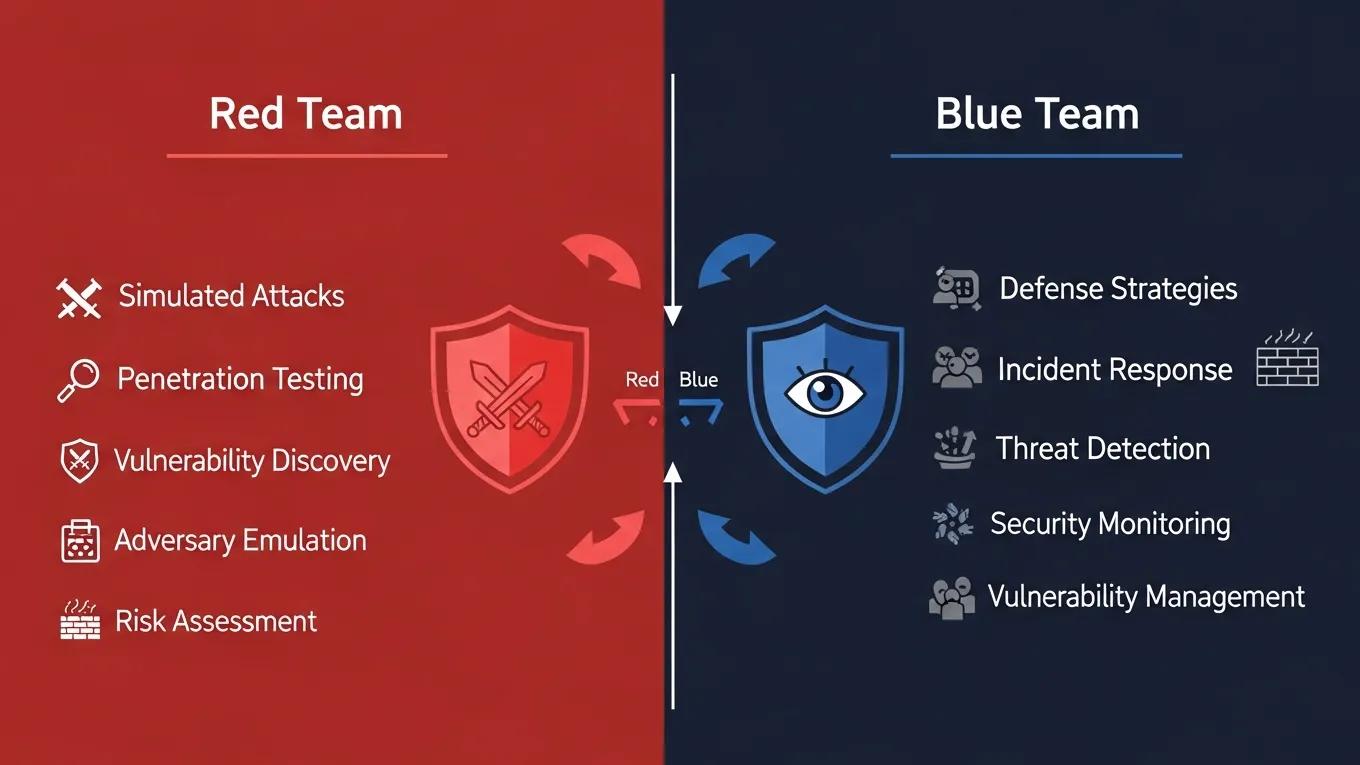
Red Team Simulated Attack Techniques
Several security systems rely on established patterns and signatures, thereby complicating the detection of innovative attack techniques employed by Red Teams.
Red Team vs. Blue Team: Assessing Cybersecurity Resilience Through Simulated Attacks, 2021
How Do Penetration Testing and Red Team Tactics Improve Security?
The integration of penetration testing and red team tactics significantly enhances an organization’s security framework. These services not only identify vulnerabilities but also provide actionable insights that can lead to improved security measures. By understanding the specific weaknesses within their systems, organizations can implement targeted strategies to mitigate risks and enhance their overall security posture.
Identifying Vulnerabilities Through Ethical Hacking Services
Ethical hacking services, such as penetration testing, play a crucial role in identifying vulnerabilities that could be exploited by cybercriminals. These services utilize a variety of techniques to uncover weaknesses, including automated scanning tools, automated pen testing, and manual testing methods. For instance, a penetration test may reveal outdated software or misconfigured systems that could serve as entry points for attackers. By addressing these vulnerabilities, organizations can significantly reduce their risk of a successful cyber attack.
Enhancing Incident Response with Security Breach Testing
Security breach testing is an essential component of incident response planning. By simulating a security breach, organizations can evaluate their response capabilities and identify areas for improvement. This proactive approach ensures that businesses are prepared to respond effectively to real-world incidents, minimizing potential damage and recovery time. Regular security breach testing also helps organizations stay compliant with industry regulations and standards.
What Is the Process of Conducting Effective Penetration Testing?
Conducting effective penetration testing involves a systematic approach that includes several key steps. These steps ensure that the testing process is thorough and provides valuable insights into an organization’s security posture.
Step-by-Step Cyber Attack Simulation Techniques
- Planning and Reconnaissance: Gathering information about the target system to understand its architecture and potential entry points.
- Scanning and Enumeration: Identifying open ports, services, and vulnerabilities through automated and manual tools.
- Exploitation: Attempting to exploit identified vulnerabilities to assess the potential impact.
- Post-Exploitation: Determining the extent of access gained and potential damage.
- Reporting and Remediation: Documenting findings and providing actionable recommendations to improve security.
Tools and Technologies Used in Vulnerability Assessment Services
Various tools and technologies are employed during penetration testing to enhance the effectiveness of the assessment. Common tools include network scanners, vulnerability assessment software, and exploitation frameworks. These tools assist testers in identifying weaknesses and simulating attacks, providing a comprehensive view of the organization’s security landscape. By leveraging advanced technologies, penetration testers can deliver more accurate and actionable insights.
Why Choose Professional Penetration Testing and Red Team Services?
Engaging professional penetration testing and red team services offers numerous benefits for organizations seeking to enhance their cybersecurity measures. These services provide access to expert knowledge and advanced methodologies that may not be available in-house.
Benefits of Engaging Certified Cybersecurity Experts
Hiring certified penetration tester professionals ensures that organizations receive high-quality assessments tailored to their specific needs. These professionals possess the skills and experience necessary to identify vulnerabilities effectively and recommend appropriate remediation strategies. Additionally, engaging experts can help organizations stay compliant with industry regulations, reducing the risk of penalties and reputational damage.
Compliance and Regulatory Considerations for Businesses
Compliance with industry regulations is a critical aspect of cybersecurity. Many regulations require organizations to conduct regular penetration testing and vulnerability assessments to ensure the security of sensitive data. By engaging professional services, businesses can demonstrate their commitment to cybersecurity and compliance, ultimately protecting their reputation and customer trust.
Different aspects of penetration testing and red team services can be compared to highlight their unique contributions to cybersecurity.
Contact Us Today
Ready to take your cybersecurity to the next level? Contact Us Today to learn how our expert penetration testing and red team services can protect your organization.
Enhance Your Cybersecurity with CodeWizzard
Ready to safeguard your organization against evolving cyber threats? Partner with CodeWizzard Cyber Security for expert penetration testing and red team services tailored to your unique needs. Our certified professionals use cutting-edge tools and innovative frameworks to identify vulnerabilities and strengthen your defenses.
Introducing the Cybersecurity Resilience Maturity Model (CRMM)
To provide organizations with a structured path to cybersecurity excellence, we propose the Cybersecurity Resilience Maturity Model (CRMM), a novel framework that integrates penetration testing and red team exercises into a continuous improvement cycle. The CRMM consists of four progressive stages:
- Baseline Assessment: Initial penetration testing to identify critical vulnerabilities.
- Simulation and Response: Red team exercises to test incident response and detection capabilities.
- Remediation and Hardening: Implementing fixes and strengthening defenses based on test outcomes.
- Continuous Monitoring and Adaptation: Ongoing vulnerability assessments and adaptive red team simulations to address emerging threats.
This model encourages organizations to move beyond one-off tests and adopt a dynamic, evolving security posture that anticipates and mitigates risks proactively.

By adopting the CRMM, businesses can transform penetration testing and red team services from isolated activities into integral components of a resilient cybersecurity strategy.
About the Author
Tom Oneil is a seasoned web design expert and digital marketing strategist with over 10 years of experience in responsive web design and mobile optimization. Hee holds a Master’s degree in Computer Science with a specialization in Human-Computer Interaction and has contributed to numerous industry-leading projects that enhance user experience across devices. Tom is passionate about helping businesses leverage technology to improve their online presence and drive growth through innovative design and cybersecurity best practices.